

Virtual reality
Enterprise virtual reality, from concept to delivery
Our team takes VR from first idea to working program: experience design, application development, headset deployment and ongoing support. Some programs run on M4, our platform. Others are standalone apps crafted for one audience.
Enterprise VR
We make enterprise VR easier to deliver, manage and scale
Virtual reality is about more than an immersive experience. To bring VR into real clinics, classrooms and workplaces, you need the right hardware, a well-designed experience, a practical deployment plan and a reliable way to manage it over time.
Our team turns VR concepts into working programs, from ideation and workflow design through development, deployment, content and ongoing technical support. Whether you are exploring VR for healthcare, wellbeing, education, rehabilitation or workforce engagement, we help you choose the right approach for your setting.
Designed for the headset in their hands
Our VR apps are made for standalone headsets such as Meta Quest 3 and 3S, with no PC and no cables. We design around what the headset can do, and around the people wearing it.
Paired to your organisation
On M4, each headset is paired to your organisation’s account, and M4 delivers the library and controls who has access. Pairing collects no patient information.
PatientVR
Safe boundaries
We set a play boundary, so the headset shows the room through its cameras if someone moves beyond it.
Hands, or controllers
PatientVR, VapingVR and RocketCrew all run without handheld controllers, so there is less to hand out, charge and clean.
A wipe-clean fit
For wards and clinics we recommend a strap that wipes clean and adjusts with a dial, and cleaning the headset between users.
Plays offline
Content downloads to the headset and plays offline, so a session doesn’t depend on the ward’s Wi-Fi.
PatientVR
Driven by hand tracking
The headset’s cameras follow the user’s hands. VapingVR’s four modules are driven entirely by hand tracking.
VapingVR
Meta and Meta Quest are trademarks of Meta Platforms, Inc. The headset shown is an illustration.
Our approach
Two ways to deliver VR, one team behind both
Some VR programs run across many headsets, sites and teams, with content that changes over time. We run those on M4, our platform, where content, access and headset management are assembled for the program and our team keeps it running.
Others are a single experience for a single audience: a health education module, a distraction for young patients, a trial in one department. We develop those as standalone apps that are self-contained on the headset.
The same team designs and develops both, so we can recommend the route that fits your program.
On M4
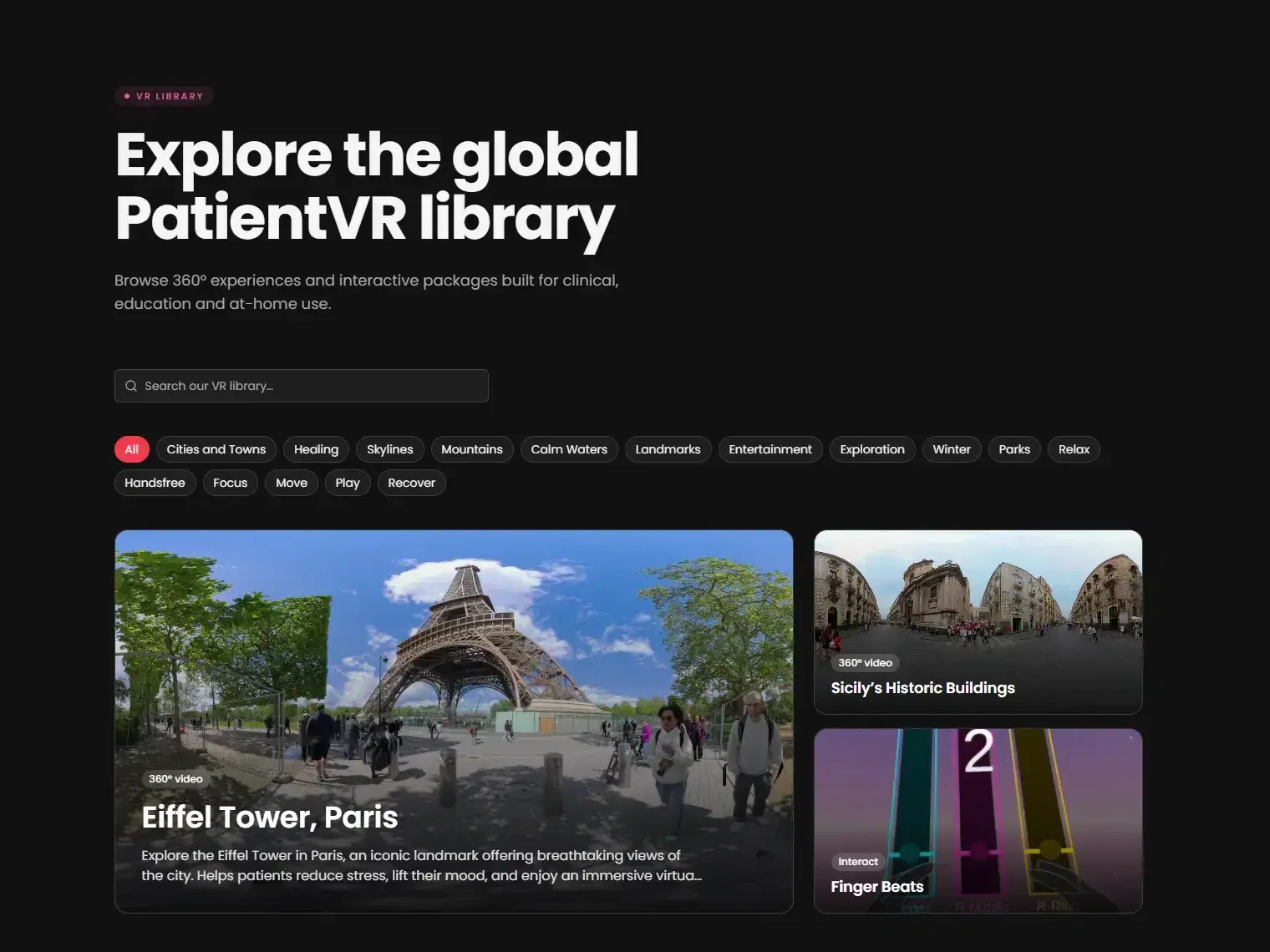
PatientVR: a managed VR program on M4
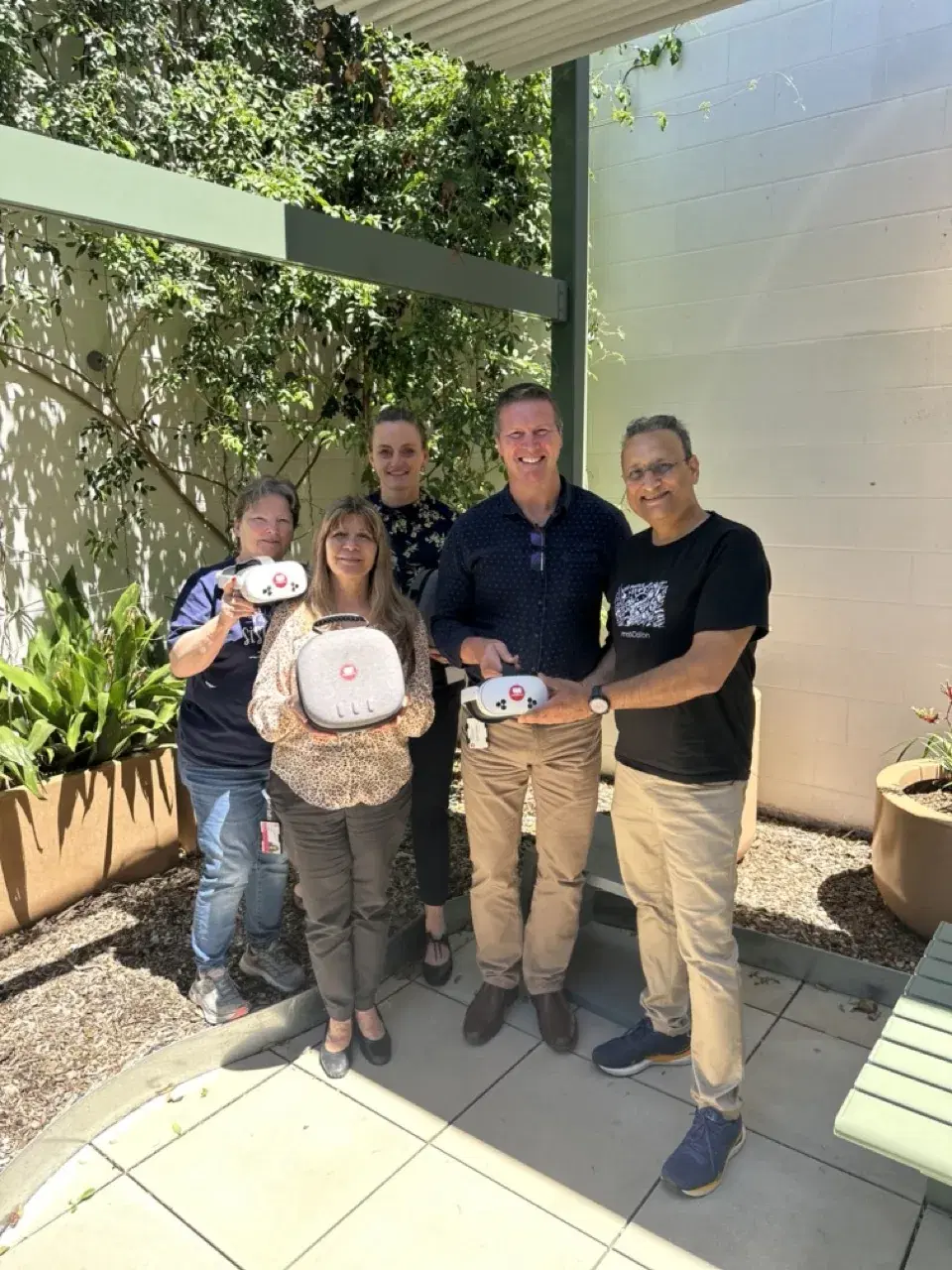
PatientVR brings immersive experiences to healthcare and wellbeing settings, for pain management, positive distraction and overall wellbeing. It runs on M4, which delivers the VR library to each headset, manages the headsets themselves and controls who has access.
It is designed for busy staff: hands-free, with no handheld controllers, and content plays offline once it is downloaded. PatientVR collects no patient or health information, and has been trialled with NSW Health and Queensland’s Metro South Health.
What M4 brings to a VR program
A VR application is only one part of an enterprise program. Content has to reach the headsets, devices need looking after, and the right people need access. For PatientVR, our team configures M4’s core for sign-in, teams and media, extends streaming for large stereo video, and crafted the headset management module that pairs, monitors and loads each headset.
Core · configured
Shared features every program uses as they are. We run them, secure them and keep them current for everyone.
Extended capability · extended
A core feature we extend for your program, with your own fields, rules and behaviour, without changing it for anyone else.
- Media streaming
Deliver large video by adaptive streaming, for the programs that need it.
Custom modules · crafted
Modules we craft only for your program and plug into the core, so they use features like sign-in, media, notifications and data.
- VR headset management
Pair, monitor and load virtual reality headsets for patient care.
Standalone VR, crafted for one audience
When a program is one experience for one audience, we develop it as a standalone app, designed around the place it will be used and ready to run on the headset.

VapingVR
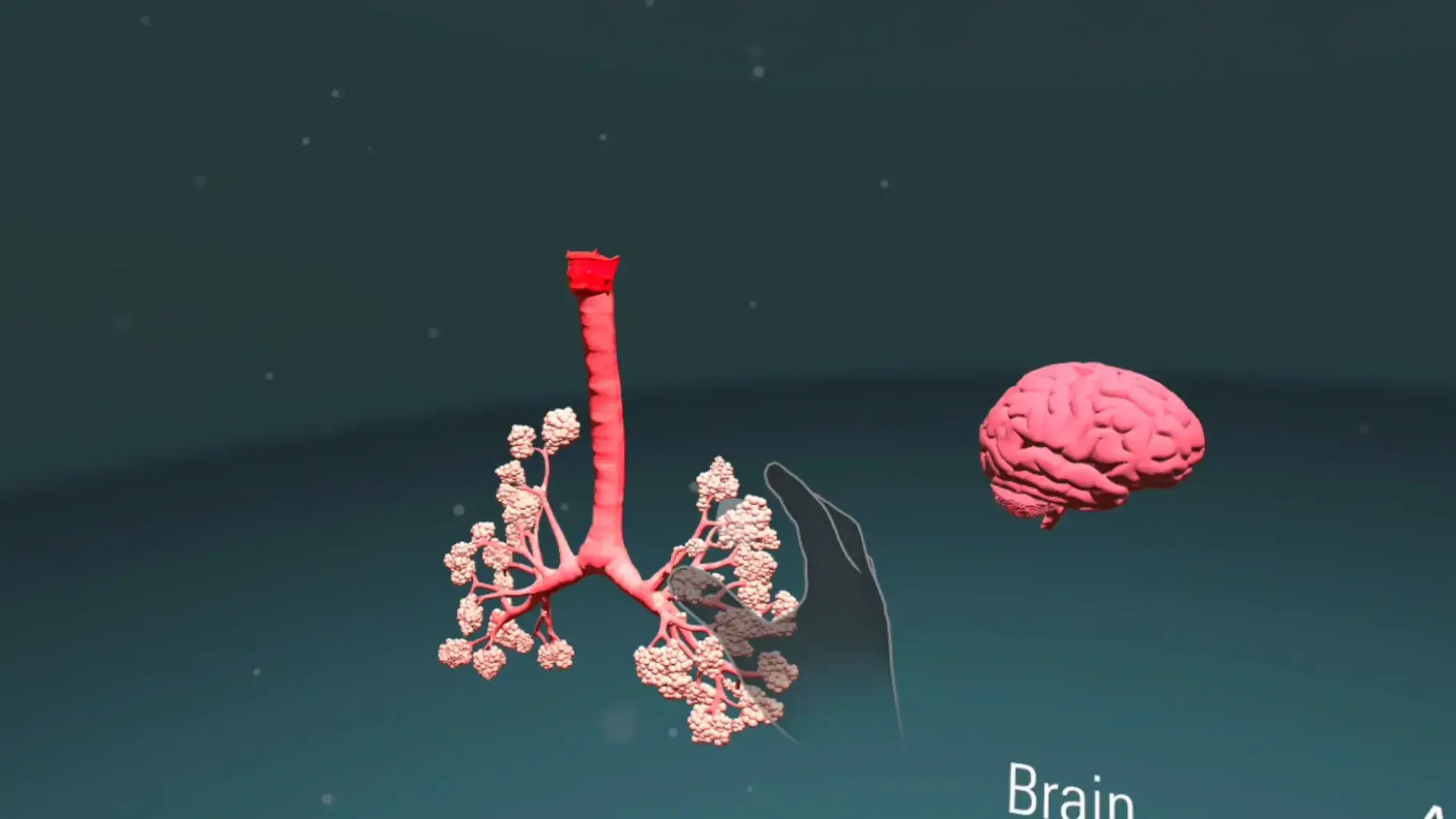
An early-intervention VR experience that shows young people the real health effects of vaping, developed with addiction medicine specialists from Nepean Blue Mountains Local Health District. Four modules cover addiction, the brain, the lungs and a quiz to reinforce learning, all driven by hand tracking with no controllers, on Meta Quest 3 and 3S headsets.
RocketCrew for Starlight
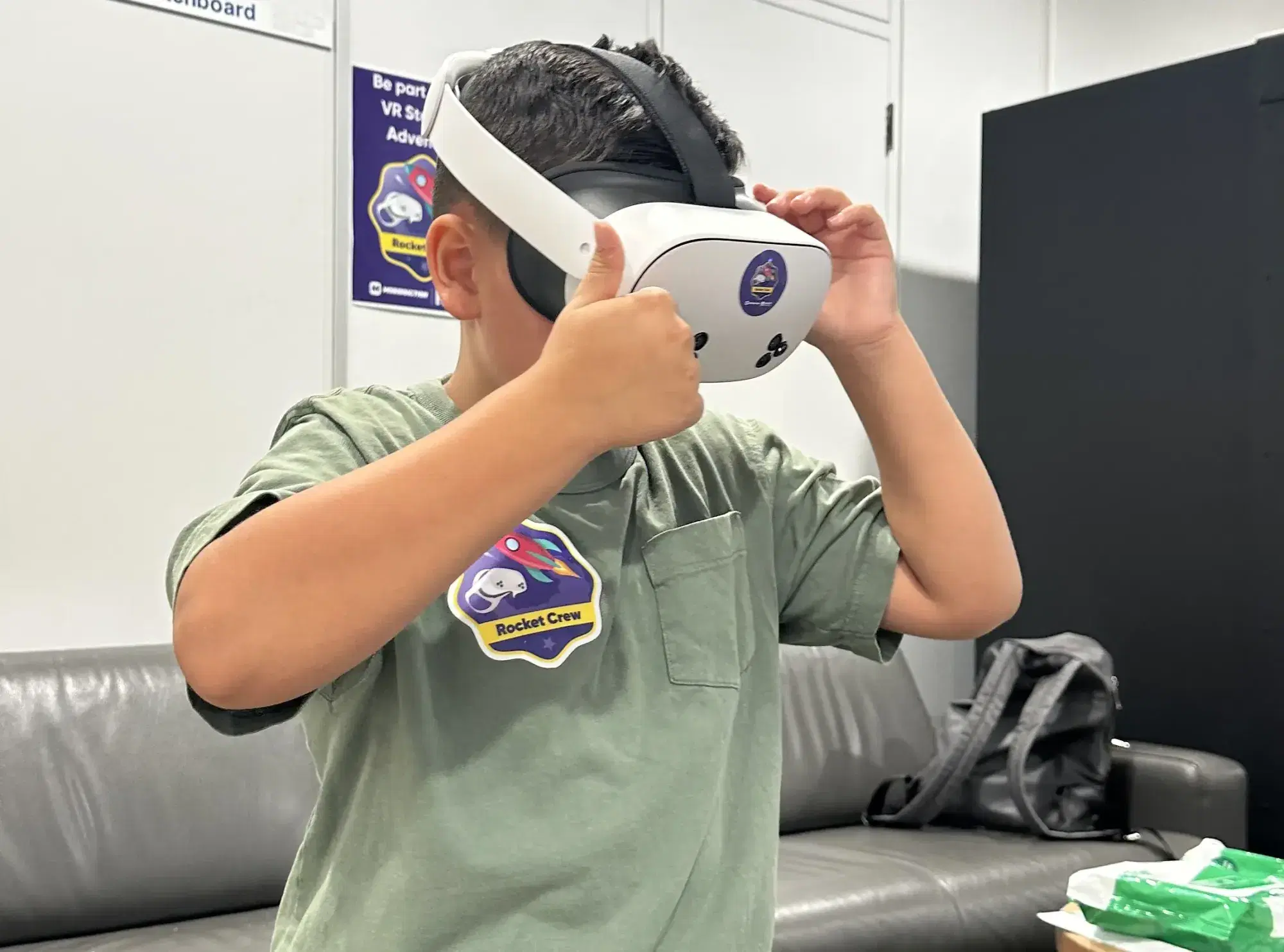
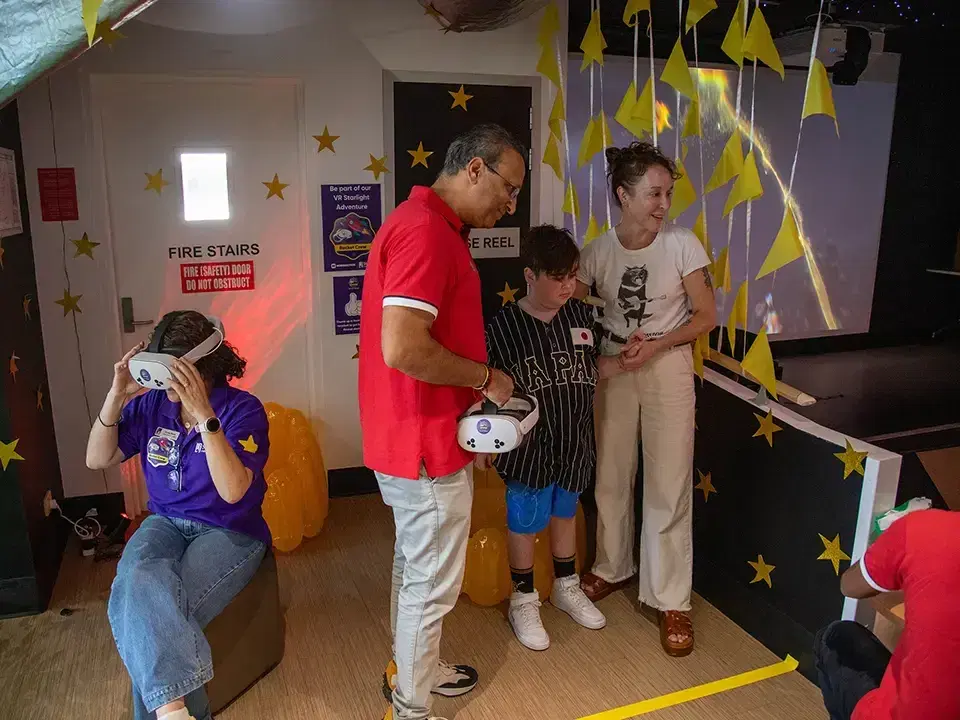
A space-themed, controller-free adventure developed with the Starlight Children’s Foundation for the Starlight Express Rooms at Sydney Children’s Hospital, Randwick and Westmead Children’s Hospital. It is designed for hospital settings: up and running in under 10 seconds, with no internet connection needed and infection control considered from the start.
HoVR at Nepean Emergency Department
A hands-free VR experience for young people in emergency care, set in a familiar Australian outback. It keeps interaction simple, with no complicated controls, and is in trial at Nepean Hospital’s Emergency Department to explore how VR can help young people in an unfamiliar clinical setting.
The RocketCrew experience has been absolutely fantastic for kids and young people visiting the Starlight Express Room. We’ve witnessed children who were withdrawn, shy or anxious become animated and excited after their VR journey.
From first idea to ongoing support
We work with organisations at every stage of a VR program, combining practical consulting with hands-on delivery.
Consult and design
We define the purpose of your VR program, understand your users and setting, map the journey and settle the workflows before development begins.
Develop
We turn concepts into working VR applications, focused on usability, accessibility and the practical needs of the places they are used.
Deploy
We help you choose headsets and a deployment model, then configure each headset, load content and train staff for rollout.
Support
Our work doesn’t end at launch: platform management, application updates, troubleshooting and technical support as your needs change.
Hardware and deployment
Need help choosing the right VR hardware?
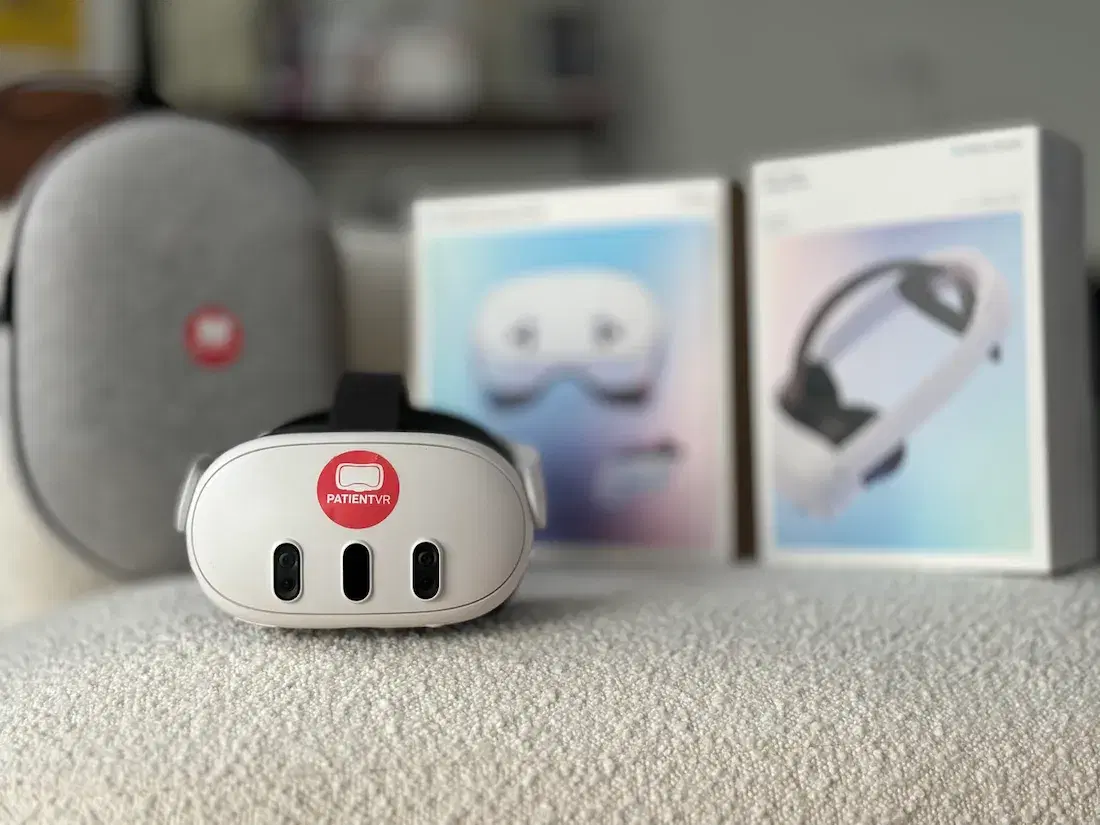
Get the foundations right before you build. Choosing a headset or deployment model before you understand the use case can add complexity, cost and avoidable operational problems.
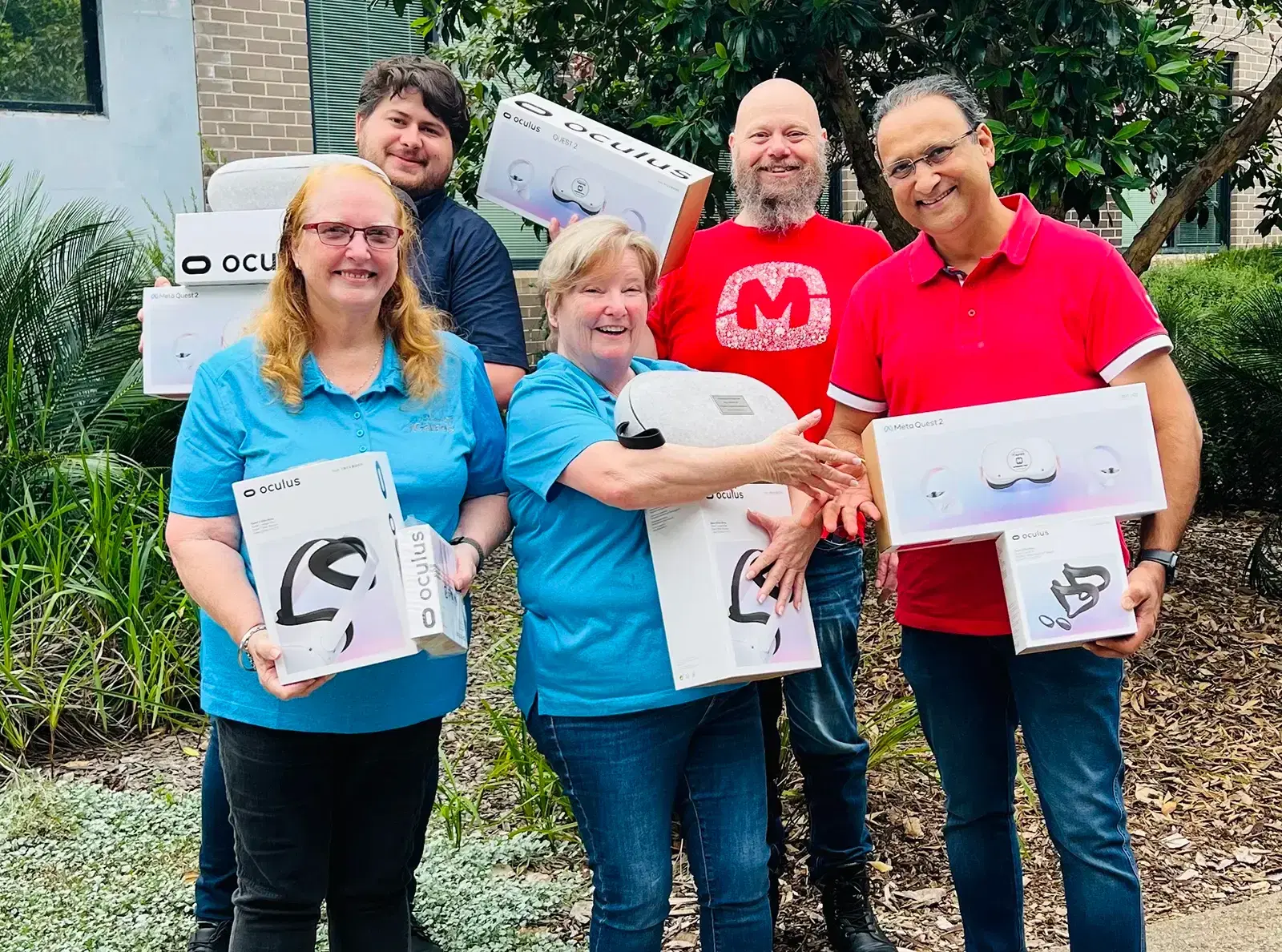
Our team offers practical consulting to assess your requirements and find the right hardware and deployment approach, drawing on hands-on experience deploying Meta Quest headsets in healthcare and education.
Whether you are planning a first pilot or managing a fleet of headsets, we help you make informed decisions before you commit.
What we help you decide
The right headset
For your application, your users and the setting it runs in.
Standalone, offline or connected
Whether the experience runs on its own, plays offline, or connects to a platform for content and management.
Controllers or hands-free
Controller-based or hands-free interaction, to suit your users, their mobility and your infection-control needs.
Device administration
The enterprise deployment and device management your organisation needs.
Content and access
How content reaches each headset, who can use each experience, and how support works.
Pilot to rollout
The practical steps from a first pilot to a broader rollout.
Ready to talk about your VR program?
Whether you have an early-stage idea, an existing VR application, or headsets and content to manage across an organisation, our team can help you work through the options, from consulting and experience design to development, deployment and ongoing management.