

Why M4
Your program starts ahead, not from scratch
Most programs need the same foundations. We keep them in one core that is already running, tested and looked after, so our team spends its time on what makes your program yours.
The Same Foundations
Most programs start with the same foundations
Sign-in, roles, users, media, content, notifications and reporting. Nearly every program needs them, and they work much the same way each time.
Making them again for each program means designing, coding, testing and securing them again, then maintaining another copy for years. On M4 they are already running, so we start from them and spend our time on what is specific to you.
Starting from scratch, or starting on M4
The difference is not what your program can do. It is how much has to be made, tested and looked after before it does.
Sign-in and access
From scratch: Designed, coded and tested for this program, then secured and kept current.
On M4: Configured for your program, with multi-factor authentication and single sign-on already in place.
Roles and users
From scratch: Permission rules and user management written again.
On M4: Configured for your team: who can see and change what, across the platform or one workspace.
Media and content
From scratch: A new upload, storage and publishing pipeline.
On M4: Configured, with upload validation, quarantine of suspect files and structured content for apps and websites.
Testing
From scratch: Every foundation tested from zero, alongside your own features.
On M4: Testing focuses on what is new for your program.
Fixes
From scratch: Found and fixed one program at a time.
On M4: Fixed once in the shared codebase, for every program running on it.
Over the years
From scratch: Another platform to host, monitor and keep current.
On M4: One core we host, monitor and keep current, for everyone.
Your budget
From scratch: Spent first on foundations every program needs.
On M4: Spent on what is specific to you.
Get to the part that is yours sooner
With the foundations already running, our team starts on what is specific to your program: the extensions and custom modules nobody else has. Less to make from scratch means less to plan, test and sign off before your program is in people’s hands.
Fewer new things to go wrong
Every new piece of code is a new place for a bug. The core’s sign-in, roles, media and content are already in use across live programs, so testing focuses on what is new, and a fix made in the core is there for every program running on it.
Proven by programs that run every day
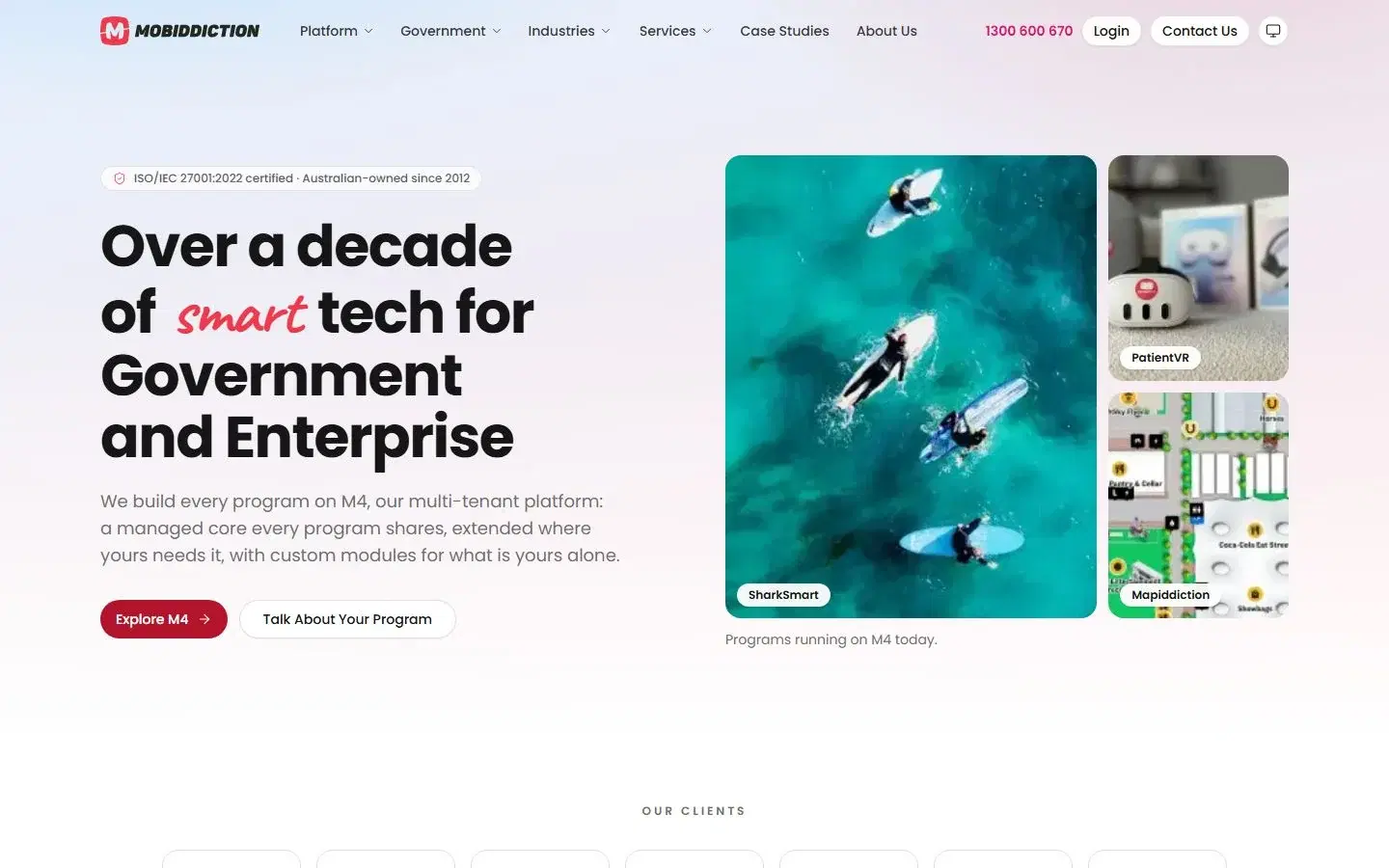
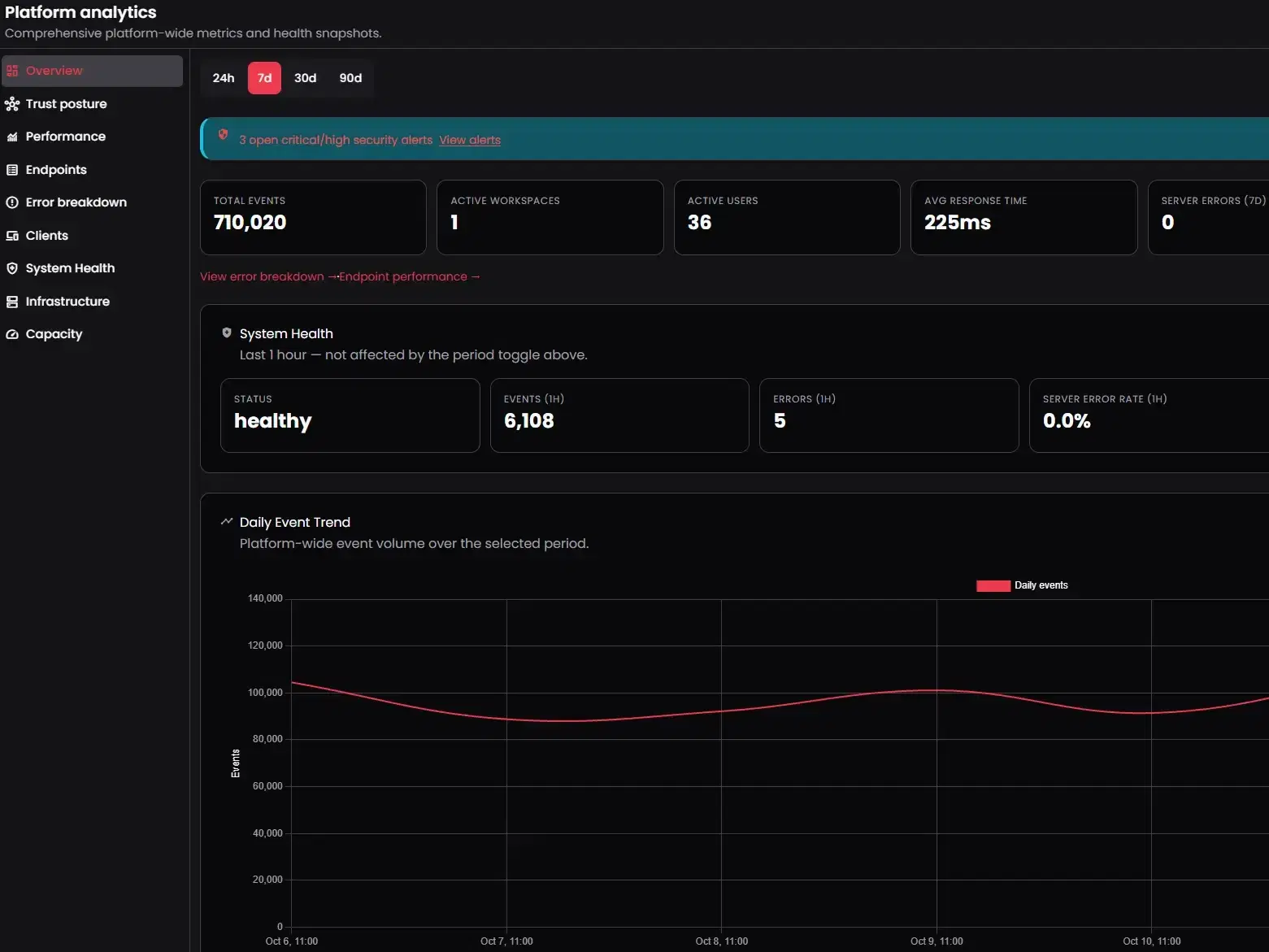
The same core runs Mapiddiction, PatientVR, SharkSmart, our own website and our support portal. It is hosted on Amazon Web Services in Sydney, and our engineers monitor, maintain and release it.
What else comes with a shared core
Starting on M4 saves more than time and testing.
Security work done once
Multi-factor sign-in, role-based permissions and rate limiting are part of the core, not extras to add later.
Security and ComplianceYour brand on a shared core
Each program gets its own domain, sender address and branding. The core sits underneath, out of sight.
AI in the core
The AI assistant is part of the core, configured to answer questions from your program’s own content.
AI on M4Updated once, inherited everywhere
We keep the core current, so improvements to core features come to your program as part of running it.
Deployed to suit you
Where compliance needs it, the same codebase runs on separately provisioned infrastructure.
How M4 Is DeployedOne team that knows it
The engineers who configure your program also run the platform and support it, so nothing gets lost in a handover.
One core behind very different programs
Maps for venues, VR for hospitals and beach safety for a state government. Each reuses the same core and adds only what is its own.
Venue maps and wayfinding
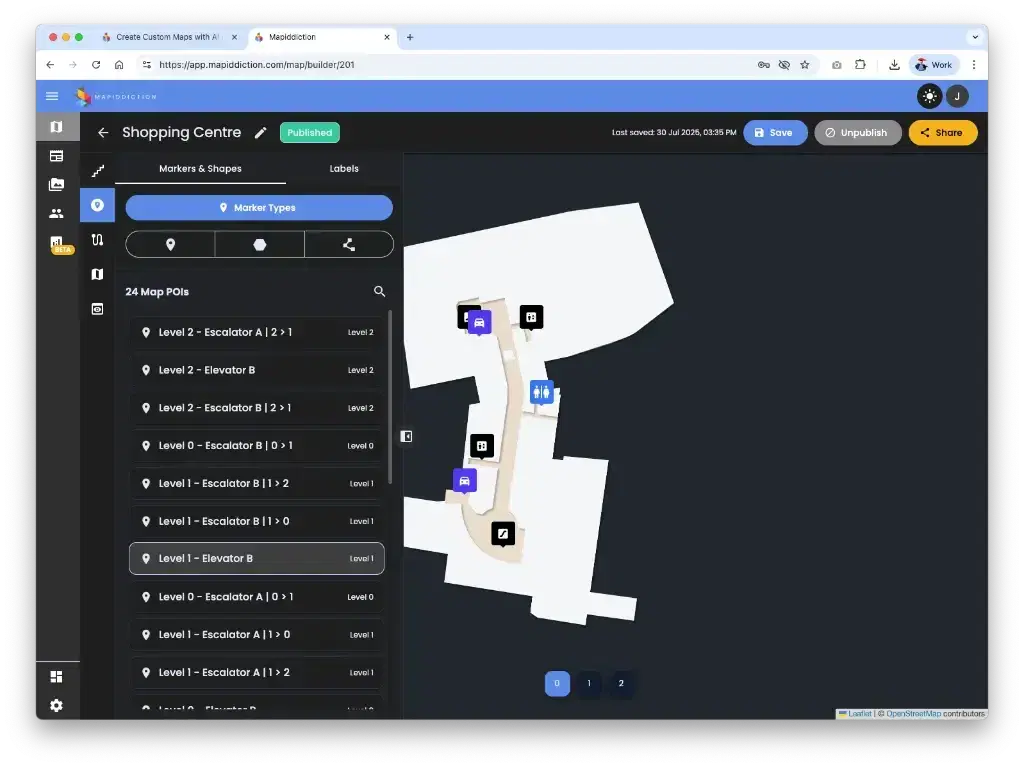
Mapiddiction reuses M4’s workspaces, roles and media as they are. What we crafted for it is what makes it Mapiddiction: maps, shapes, AI-powered wayfinding and publishing to websites, apps and screens.
- Maps and wayfinding
- Data feeds
- 7 core features
VR content and headsets for patient care
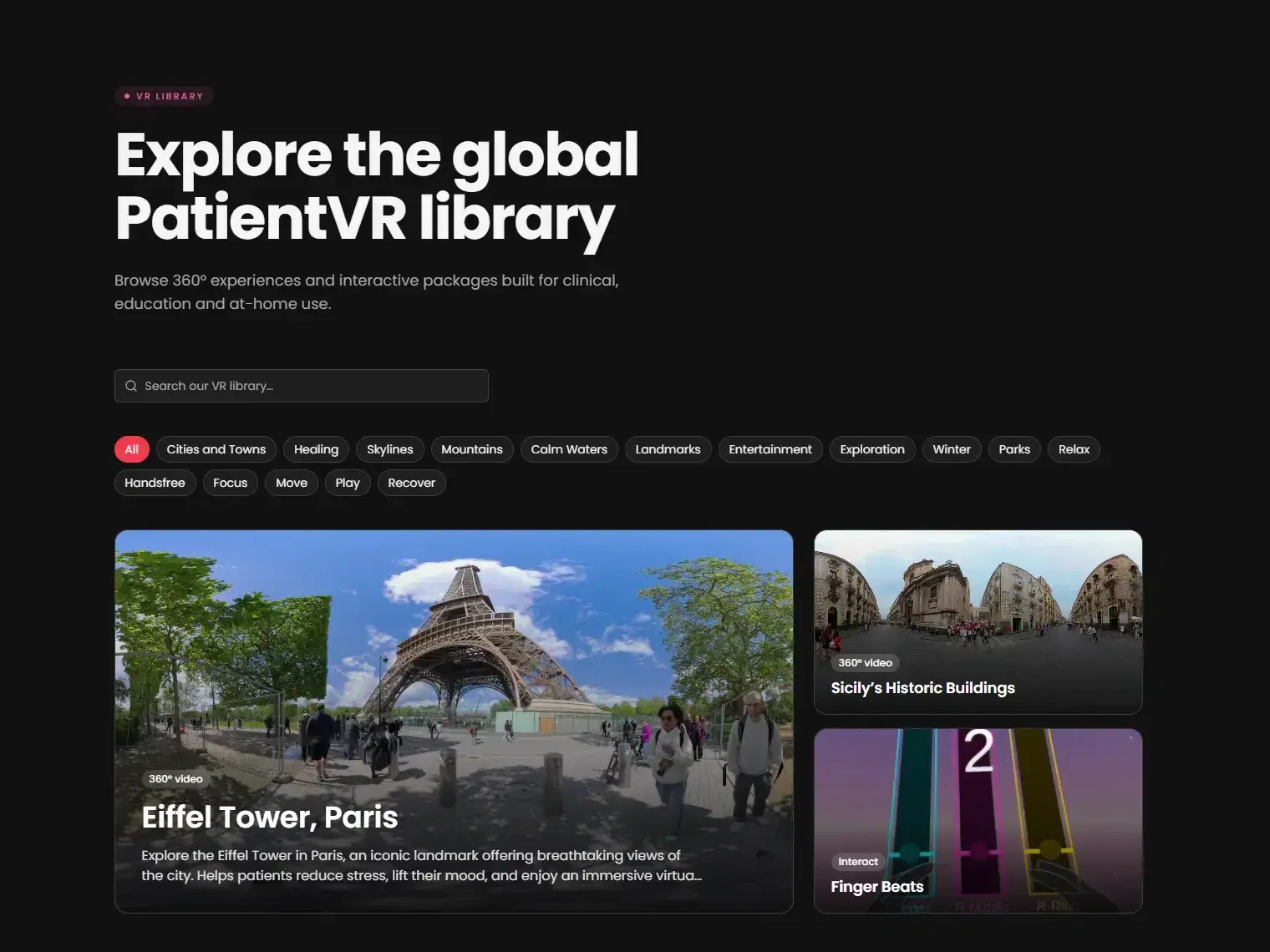
PatientVR reuses M4’s sign-in, roles, media and analytics. We extended media with streaming for large VR video, and crafted a module that pairs headsets and manages their content and licences.
- VR headset management
- Media streaming
- 4 core features
Beach-safety alerts for DPIRD
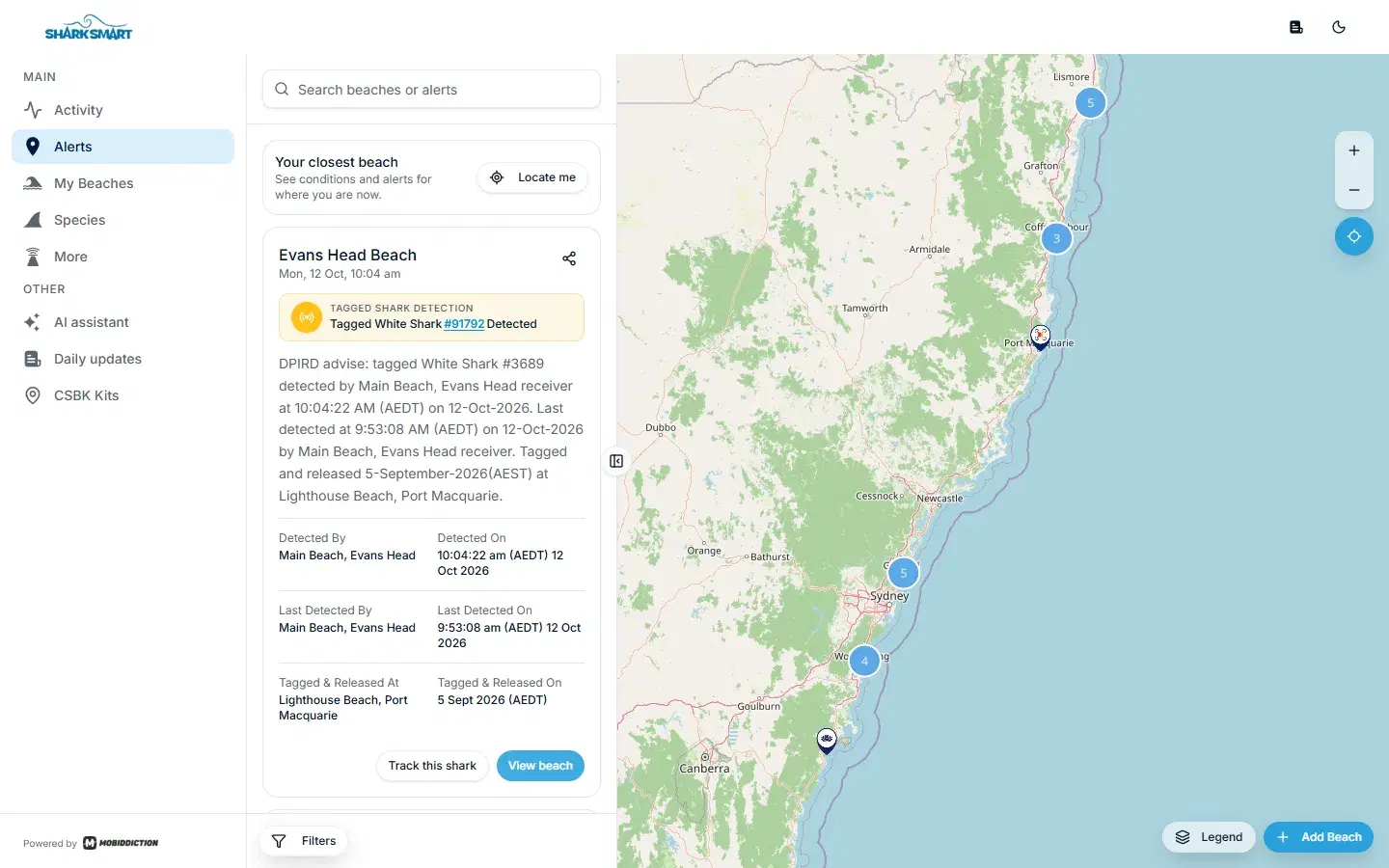
SharkSmart reuses M4’s sign-in, roles and content. Alerts and scheduled data from the Bureau of Meteorology, Beachwatch and timeanddate are extended for it, and custom modules run the operator tools behind a statewide program.
- Beach-safety operations
- Alerts
- 8 core features
Questions we are asked about M4
Will our program look like every other program on M4?
No. Each program gets its own domain, sender address and branding, and the parts people notice most are usually the ones we extend or craft for you. The shared core is what sits underneath.
What if we need something M4 doesn’t do?
Where a core feature has to work differently for you, we extend it with your own fields, rules and behaviour. Where you need something that exists nowhere else, we craft a module and plug it into the core, so it uses the same sign-in, media and notifications as the rest of M4.
Does a change for another program affect ours?
We extend a core feature for one program without changing it for anyone else, and custom modules belong to the program they were crafted for. Features your program hasn’t switched on can’t be reached in it.
Is our data kept separate from other programs?
Yes. Programs share one managed platform, with each program’s data kept separate. Where compliance needs more, the same codebase runs on separately provisioned infrastructure, as it does for the DPIRD program.
Do we have to take the whole platform?
No. We switch on only what your program needs today, and add more of the core as it grows.
How is M4 kept secure?
Security work happens once, in the core: multi-factor sign-in, role-based permissions and rate limiting, kept current by our engineers. Our Security and Compliance page covers the detail, including our certification.
Ready to start ahead?
Tell us what your program needs to do. We’ll show you what the core already covers, and where our team would spend its time.